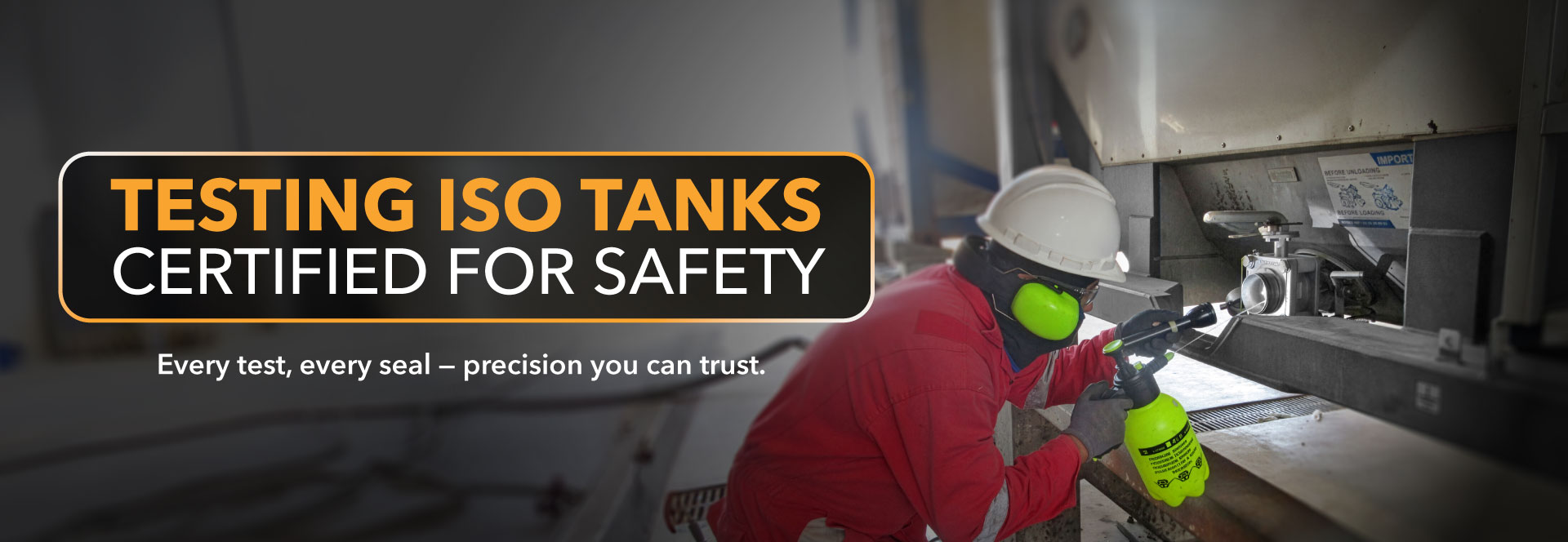
Testing ISO Tanks: What Goes Into Global Certification
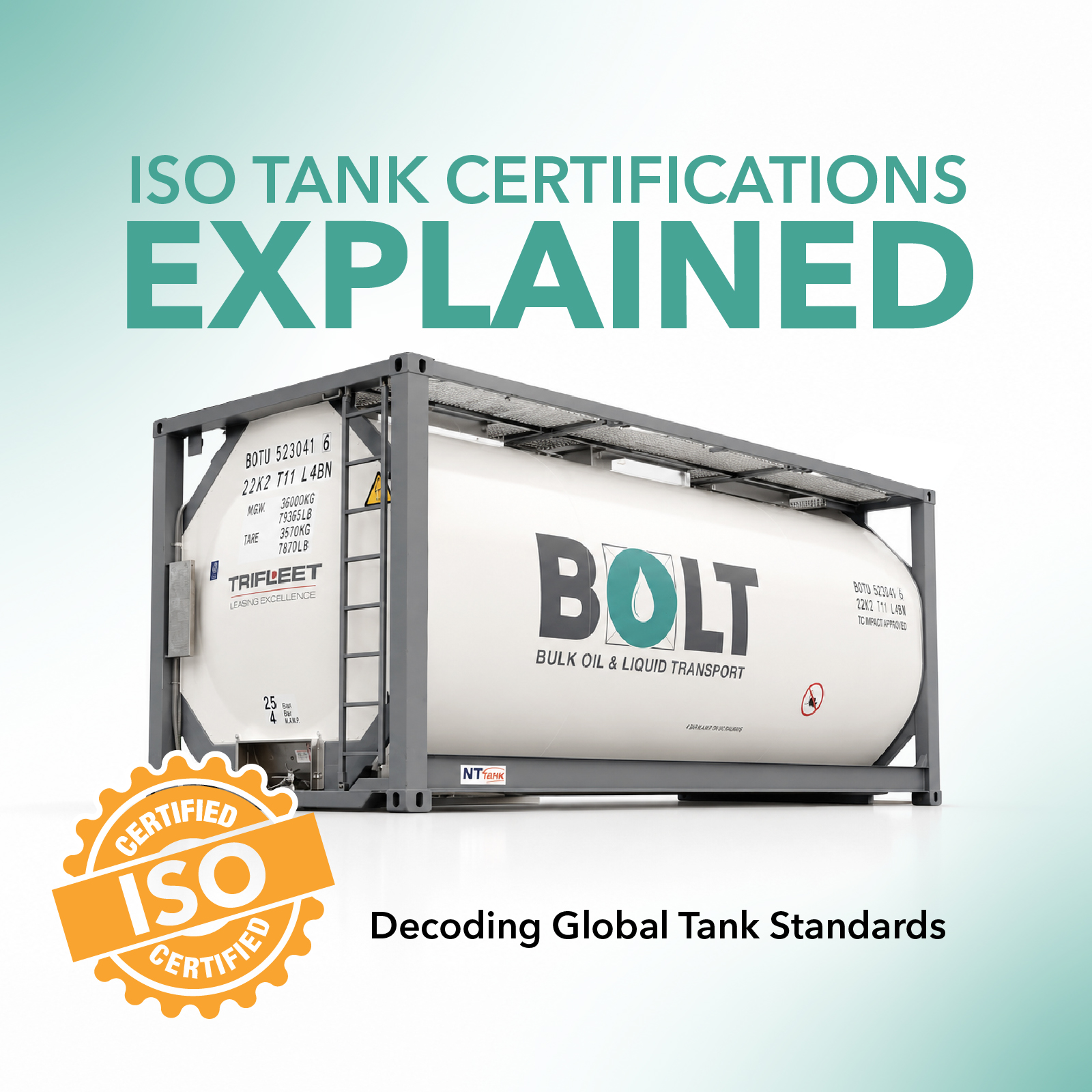
Transporting liquids across borders demands absolute reliability — and that reliability begins long before a tank is loaded. Each ISO tank must undergo a series of stringent tests to ensure it can safely withstand pressure, temperature variations, and mechanical stresses during transport. These tests form the backbone of ISO tank certification and are carried out in compliance with international standards such as IMDG, ADR, and ISO 1496/3.
Here’s a closer look at what goes into testing an ISO tank before it’s deemed ready for service.
- Hydraulic Test: Measuring Strength and Structural Integrity
The hydraulic test is the most fundamental and rigorous check performed on every tank. It involves filling the tank with water and applying internal pressure — typically 1.5 times the tank’s design pressure — for a specific duration.
This test ensures that the tank shell, heads, and weld seams can withstand pressure without any deformation or leakage. Water is used instead of air because it’s non-compressible and therefore safer in case of failure.
Purpose:
- Verifies the mechanical strength of the tank.
- Confirms the quality of welds and materials.
- Detects structural weaknesses before use.
A successfully passed hydraulic test proves that the tank can endure internal pressures well beyond normal operating conditions, making it fit for long-distance, multimodal transport.
- Pneumatic (Air) Pressure Test: Ensuring Airtight Performance
Once structural integrity is confirmed, the next step is to verify airtightness. The pneumatic pressure test uses compressed air or inert gas to check for leaks in valves, gaskets, and fittings.
Because air compresses, this test is carried out at lower pressures under strict safety measures. The tank is submerged in water, and any escaping air produces bubbles, helping inspectors locate even microscopic leaks.
Purpose:
- Ensures the tank can hold gases or vapors without leakage.
- Confirms seal integrity at manlids and fittings.
- Detects minor imperfections invisible to the naked eye.
While the hydraulic test focuses on strength, the pneumatic test validates tightness — a crucial requirement for carrying hazardous or high-value liquids.
- Leak Test: Detecting Imperfections Under Real Conditions
The leak test complements the pneumatic test by focusing on the smallest, often overlooked defects. This may include dye penetrant testing, soap solution checks, or helium sniffing methods, depending on the tank’s cargo type and certification level.
Modern testing facilities increasingly use helium or nitrogen-based leak detection, capable of identifying pinhole leaks that would be undetectable by conventional methods.
Purpose:
- Ensures total sealing integrity for safety and product protection.
- Prevents contamination and product loss during transport.
- Meets the stringent requirements for food-grade and chemical cargoes.
This step guarantees that the tank is not just structurally sound, but airtight, watertight, and cargo-ready.
- Periodic Testing and Certification Renewals
Certification is not a one-time process. ISO tanks undergo periodic inspections — typically every 2.5 and 5 years — as per international transport codes.
- 2.5-year inspection: Focuses on internal and external checks, visual inspection, and leak testing.
- 5-year inspection: Involves full hydraulic testing, thickness measurement, and internal examination.
Each tank must bear a data plate showing its last test date, pressure rating, and certification details. This ensures traceability and continuous compliance throughout its operational life.
- Global Standards Governing Tank Testing
Testing and certification are governed by a combination of international frameworks to ensure uniformity and safety:
- ISO 1496/3: Defines the structural and performance requirements for tank containers.
- IMDG Code: Governs the safe transport of dangerous goods by sea.
- ADR & RID: Apply to road and rail transport, respectively.
- CSC (Container Safety Convention): Regulates safety inspections for intermodal containers.
Together, these standards ensure every ISO tank is globally recognized and trusted for safe liquid transport.
Conclusion: Safety Proven, Not Assumed
Testing isn’t a formality — it’s proof of trust. Each hydraulic, pressure, and leak test reaffirms that the tank can protect its cargo, handlers, and the environment, regardless of the journey’s complexity.
When an ISO tank earns its certification, it carries more than just product — it carries the assurance of engineering precision and safety that meets the world’s toughest standards.
Blog by: