
The Lifecycle of an ISO Tank Container: From Manufacturing to Maintenance
Summary (Quick Read):
An ISO Tank, if properly maintained, can serve reliably for 25 to 30 years. This blog takes you through its entire lifecycle—from precision manufacturing and international certifications to periodic inspections like the 2.5-year and 5-year checks. You'll also learn about cleaning protocols, re-certification practices, and common repair requirements that keep these tanks compliant and efficient throughout their operational life.
The Lifecycle of an ISO Tank Container: From Manufacturing to Maintenance
ISO Tanks are robust, long-lasting assets in global logistics. When maintained diligently, they can operate efficiently for up to 20–30 years. But what exactly goes into the lifecycle of an ISO Tank? Let's explore how these specialized containers are manufactured, maintained, and periodically inspected to ensure peak performance and safety.
- Design & Manufacturing
Each ISO Tank begins its life with a rigorous design process. The tank must meet international standards like ASME (American Society of Mechanical Engineers) the IMDG (International Maritime Dangerous Goods Code), ADR (European Agreement), and. Stainless steel is the material of choice due to its corrosion resistance and durability.
During manufacturing:
- The inner vessel is constructed from stainless steel, probably SS 316 L
- Insulation (rockwool or polyurethane) is added
- A protective frame is built to fit ISO dimensions (20ft standard)
- Safety valves, manlid, other fittings and temperature gauges are installed
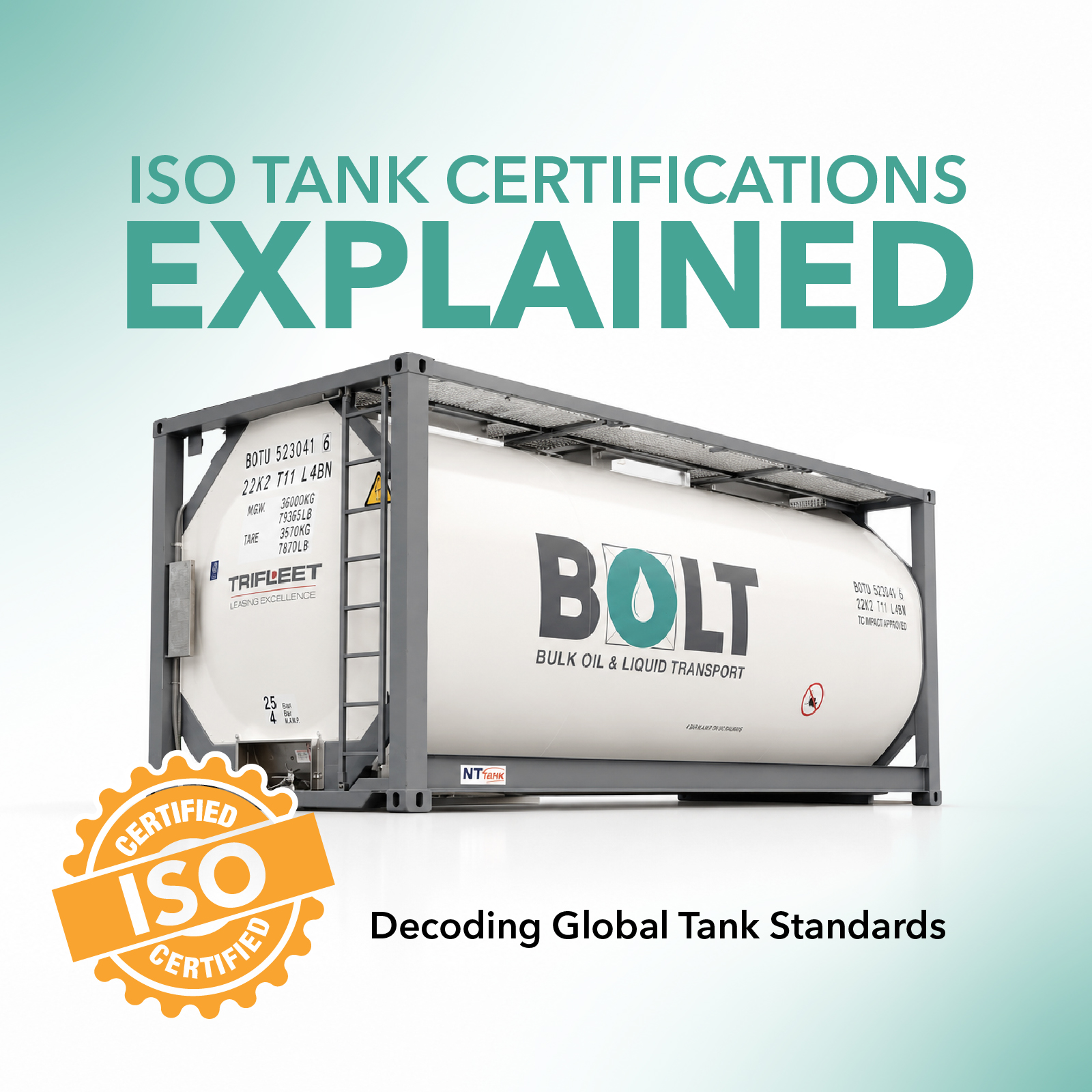
- Initial Certification & Approval
Before it enters service, every ISO Tank undergoes thorough testing:
- Hydrostatic Pressure Test
- Structural Integrity Checks (stacking test, racking test etc..)
Once passed, it is granted a certificate of fitness, valid for loading.
- Routine Inspections: The 2.5-Year & 5-Year Rule
To keep an ISO Tank operational and compliant, it must undergo:
- 2.5-Year Inspection: Mid-life check to examine insulation integrity, pressure retention, and frame condition.
- 5-Year Inspection: A more detailed inspection involving pressure testing, and re-certification. This process essentially resets its certification.
These inspections are recorded and logged with classification societies such as Lloyd’s Register, Bureau Veritas, or DNV.
- Cleaning & Maintenance
After each use, tanks are cleaned at certified cleaning depots to prevent contamination and corrosion. Food-grade and pharmaceutical tanks require even stricter protocols.
Maintenance tasks include:
- Gasket replacements
- Valve inspections
- Structural frame repairs
- Refurbishment: Extending Tank Life
Over decades of use, the health of the tank shell becomes critical. During major inspections or after years in service, the tank is thoroughly assessed:
- If the shell’s thickness and integrity are intact, the tank can be refurbished—receiving new insulation, updated valves, and fresh protective coatings.
- This extends the operational life, ensuring the tank continues to meet global safety and performance standards.
Each refurbishment step is followed by partial or full re-certification.
Conclusion
The ISO Tank isn’t just a container—it’s a high-performance, globally compliant logistics solution. With the right inspections, maintenance, and refurbishment, it can deliver three decades of safe, efficient service.